


What is effluent toxicity?
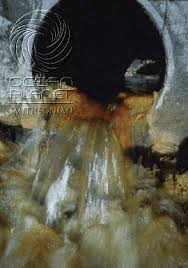
Effluent toxicity is a measure of a substance’s ability to interfere with the growth, reproduction, or survival of living organisms near the effluent. If a substance affects the growth and reproduction of an organism, the effect is called chronic toxicity. If a substance kills an organism, the effect is called acute toxicity. It usually comes from the liquid waste products from industries and mills.
How are they produced?
Effluent toxic organic halides can also be produced during the bleaching process in the pulp and paper industry. When the chlorine compounds react with the residual lignin from wood fibres, many adsorbable organic halides are produced.
What are Adsorbable Organic Halides?
Why do they matter?
AOX compounds pose a potential concern because they resist breaking down in the environment therefore they have long half-life periods. Some of these molecules are toxic at high concentrations. They pose a potential threat to the aquatic organisms living in estuaries near pulp effluents because they can accumulate in the food chain. They may be carcinogens or mutagens.
How are they regulated?
In Ontario, both federal and provincial governments require pulp and paper mills to perform acute toxicity testing of effluent on a monthly basis and the effluent must be 100% non-toxic. Chronic toxicity monitoring is carried out twice a year and is also part of the federal government’s Environment Effects Monitoring (EEM) program on the receiving waters of the mill effluent.
How are they measured?
Environmental regulations require a sample of the liquid waste from the pulp mill factories to be taken and analyzed to determine the quantity of AOX compounds in the sample. In this method the waste sample is passed through an activated carbon filter. The carbon and the material trapped in it are burned, and the combustion gases are collected in order to determine the chloride content. The concentration of the AOX compounds in the waste from the factories can then be calculated.
How do we control them?
By using alternatives to chlorine such as chlorine dioxide, ozone, oxygen and peroxide, the levels of AOX can be reduced significantly. There is also a secondary effluent treatment which reduces the AOX compounds in the environment.
Absorbable Organic Halide (AOX) Discharge in Pulp and Paper Effluent

YEAR
Are measures to reduce pulp and paper effluent effective?
-
AOX (adsorbable organic halide) is a measure of the amount of chlorinated organic compounds in pulp and paper effluent discharge.
-
In 1992, British Columbia established a legally binding requirement to eliminate AOX from the pulp and paper bleaching process by the end of 2002.
-
From 1991 to 1999, average pulp mill AOX discharges were reduced by 83%, from 36.6 to 6.2 tonnes per day.
-
A recent scientific review found that there was no evidence to suggest that current reduced levels of AOX discharge present a measurable risk to the aquatic ambient environment.
How are pulp and paper mills in British Columbia mitigating their environmental impacts?
-
There are presently 25 pulp and paper mills in British Columbia. Nine of these mills discharge into coastal waters, 13 into inland water bodies, two into municipal sewage systems and one mill evaporates effluent.
-
Effluent from mills that do not treat or have minimal treatment, contains high levels of AOX, making it acutely toxic. Acute toxicity kills fish and other species when they come in contact with the effluent.
-
Since the early 1990s pulp and paper mills in British Columbia have been adopting new technology that uses chlorine dioxide instead of elemental chlorine to bleach pulp. Mills that are elemental chlorine free (ECF) produce about one tenth the amount of AOX as they had when elemental chlorine was used.
How are the concentrations of the AOX in Effluents detected?
As already mentioned above, the government needs to analyze the composition of the AOX. The concentration of organic halides can be measured by using a coulometer. The coulometric method is used for the analysis of organic halogens determined in terms of global parameters AOX, EOX and POX.
Chlorinated compounds are mineralized in pyrolysis tube at 950° C in the oxygen stream. Pyrolysis is when a chemical is heated at high temperatures where chemical decomposition (breakdown of the molecule into its elements) occurs spontaneously. The hydrogen halides formed during pyrolysis are then dehydrated in sulfuric acid and analyzed by coulometric titration.
Different ways the organic halides are trapped:
AOX - The halogen compounds contained in the sample are absorbed on active charcoal.
EOX - In this method the organic halogen compounds contained in the aqueous sample are concentrated by liquid – liquid - extraction.
POX - Volatile organic halogen compounds are purged out of the aqueous sample solution with an oxygen stream and burnt in the combustion tube.
What does a coulometer look like?
The following picture is the coulometer WTK:

Coulometer WTK for organic halides
We can use coulometers in:
- surface waters
- sewerage waters
- sediments
- adipose tissues (body fat)


Pictures

Comments (5)
Gina Lam said
at 1:49 pm on Mar 7, 2010
could you post them again from the direct link? i couldnt see them when i was on the site
Farzana Afrin said
at 9:57 am on Mar 7, 2010
the links for the last two pics were already at the bottom of my page from before
Gina Lam said
at 3:39 am on Mar 7, 2010
also, i need to know where the last 2 pictures came from. thanks
Gina Lam said
at 2:12 am on Mar 7, 2010
hey guys this site doenst work >>>> http://www.bowater.ca/environment/water.aspx?id=58
Farzana Afrin said
at 1:42 pm on Mar 6, 2010
hey gina .. . u gotta do the references for these tooo :)
You don't have permission to comment on this page.